

If you care about keeping your vehicle’s paint looking clean, swirl marks and light scratches can be frustrating. Even careful washing, daily commuting, road debris, and regular use can gradually leave small marks on an otherwise well-maintained finish.
At Advanced Window Tinting & PPF, we help Tacoma-area drivers protect their vehicles from exactly these everyday problems. One technology we often discuss with customers is self-healing PPF.
Self-healing paint protection film is designed to do more than place a transparent barrier over your vehicle. Its engineered surface can recover from many light scratches, swirl marks, and minor abrasions when the film reaches the right temperature.
That does not mean the film is indestructible. Deep cuts, punctures, and severe impacts do not simply disappear. Understanding that difference helps you know what self-healing PPF can realistically do and whether it makes sense for the way you drive around Tacoma and Pierce County.
What Is Self-Healing PPF?
Self-healing PPF is a type of automotive paint protection film designed to protect factory paint while reducing the appearance of certain minor marks in the film itself.
The film creates a clear sacrificial barrier between your paint and everyday hazards such as:
- Road debris
- Small stones
- Bug residue
- Light scratches
- Wash-induced swirl marks
- Minor abrasions
- Environmental contaminants
When we install paint protection film in Tacoma, the goal is not to make a vehicle impossible to damage. No film can do that.
Instead, PPF gives your paint another layer of defense. If something contacts the vehicle, the film takes the exposure first.
Self-healing technology adds another benefit. When minor marks affect only the film’s engineered surface, warmth can help that surface return toward its original smooth appearance.
How Does Self-Healing PPF Work?
One of the most common questions we hear is, how does self-healing PPF work?
It sounds futuristic, but the basic idea is easier to understand when you look at how modern paint protection film is constructed.
A Flexible TPU Film Forms the Protective Base
Premium automotive paint protection film commonly uses thermoplastic polyurethane, or TPU, as an important part of its construction.
TPU film is flexible, transparent, and durable. Those characteristics allow it to conform closely to body panels while creating a physical protective layer over the paint.
That flexibility matters.
An ordinary rigid material would not work well across curved hoods, bumpers, fenders, mirrors, and other complex vehicle surfaces. Automotive PPF needs to follow those contours while handling everyday movement, temperature changes, washing, and road exposure.
The TPU layer also helps absorb and distribute some of the energy created by minor impacts.
The Self-Healing Top Coat Handles Minor Surface Marks
The part responsible for the healing effect is the engineered surface or elastomeric top coat.
When a very shallow scratch or swirl mark occurs, the surface may be disturbed without being completely cut apart. Instead of material being removed, the flexible structure is temporarily displaced.
You can think of it as a surface being pushed out of shape rather than carved away.
When enough warmth reaches the film, movement within the polymer structure increases. The material can then relax toward its original form, making some fine scratches less noticeable or allowing them to disappear.
That is why self-healing PPF works best on surface-level damage.
It is also why we never describe PPF as completely scratch-proof.
Why Does Self-Healing PPF Need Heat?
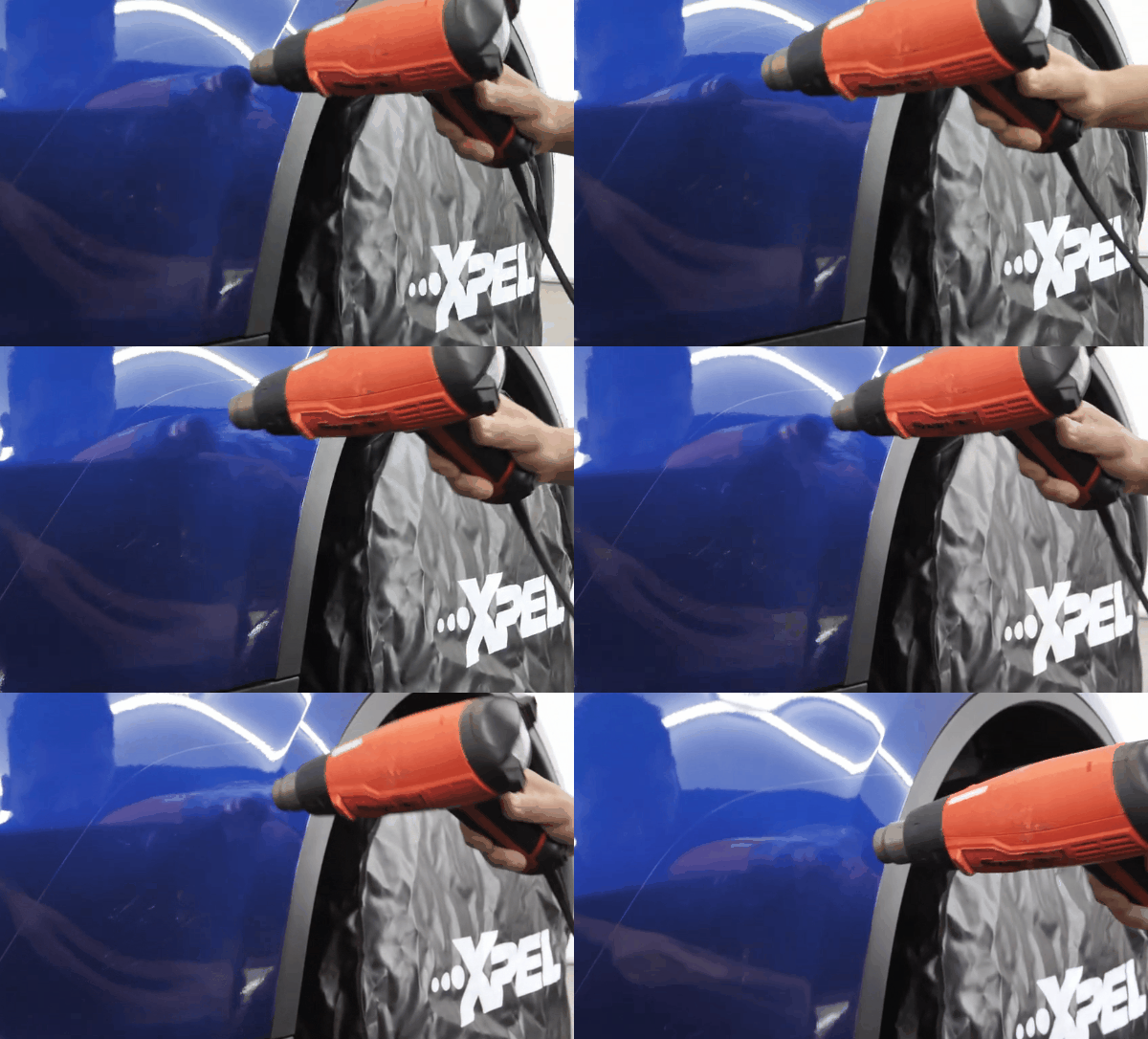
Heat helps activate the film’s ability to recover from minor surface deformation.
Depending on the film and environmental conditions, that warmth may come from sunlight or naturally warmer temperatures.
This does not mean the film melts or somehow fills a scratch with new material. Instead, sufficient warmth allows the engineered surface to become more mobile and return toward a smoother state.
For drivers in Tacoma, this is worth understanding because our weather is not always warm and sunny.
You might notice a faint mark while your vehicle is cool and then see it become considerably less visible after the panel warms later.
The time required can vary based on:
- The depth of the mark
- Film temperature
- Film formulation
- Age and condition of the PPF
- Environmental conditions
There is no single healing time that applies to every scratch or every vehicle.
Does Self-Healing PPF Need Direct Sunlight?
Not necessarily.
Sunlight is useful because it naturally warms the film, but it is the heat rather than sunlight itself that supports the healing process.
We do not recommend using excessive heat to force a mark to disappear. Following the care recommendations for your particular film is always the safer approach.
What Scratches Can Self-Healing PPF Fix?
This is where realistic expectations become especially important.
In our experience, customers often hear “self-healing” and assume the film can recover from almost any damage. That is not how the technology works.
Self-healing PPF is best suited for minor cosmetic marks such as:
- Fine swirl marks
- Light wash marring
- Small microfiber towel marks
- Very shallow scratches
- Light brush contact
- Minor surface abrasions
These types of marks affect the surface without destroying the underlying film.
A scratch resistant paint protection film can therefore remain looking cleaner through normal everyday use than an unprotected painted surface.
But there are clear limits.
Why Do Some Scratches Disappear While Others Remain?
The biggest difference is usually the depth of the damage.
A light scratch may disturb only the self-healing top layer. Because that layer is still physically intact, it may be able to smooth back out when warmed.
A deep gouge is different.
If an object physically cuts into the TPU film, slices through the top coat, or removes material, there is no continuous surface available to return to its previous shape.
In simple terms:
Self-healing can correct minor surface deformation. It cannot recreate missing material.
That is why the following types of damage generally will not simply heal away:
- Deep cuts
- Punctures
- Torn film
- Severe abrasions
- Heavy impact damage
- Areas where film material has been removed
Even when PPF itself becomes damaged, however, it may still have done exactly what it was installed to do: protect the paint underneath.
Can Self-Healing PPF Repair Rock Chips?
Not exactly.
PPF for rock chips works differently from the self-healing function.
When a stone strikes a protected bumper or hood, the film acts as a barrier between that debris and the painted surface underneath. The TPU layer can absorb and distribute part of the impact.
The self-healing top coat, meanwhile, is primarily designed to deal with much lighter surface marks.
Here is an easy way to compare the two:
|
Damage |
How PPF Responds |
|
Fine swirl mark |
May self-heal |
|
Light surface scratch |
May self-heal |
|
Minor wash marring |
May self-heal |
|
Light brush mark |
May self-heal |
|
Rock impact |
Film helps protect the paint, but a mark may remain |
|
Deep gouge |
Usually will not self-heal |
|
Tear or puncture |
May require film replacement |
No PPF can stop every possible impact. A large or fast-moving piece of debris can damage both film and paint.
The purpose is to reduce exposure and give the factory finish a much stronger first line of defense.
Why Self-Healing PPF Is Useful for Tacoma Drivers
We work with vehicles that see very different types of use throughout Tacoma and Pierce County.
Some customers spend most of their time commuting. Others drive trucks or SUVs on gravel roads, use their vehicles for work, or regularly travel beyond paved city streets.
All of those situations can expose paint to wear.
Highway Commuting and Road Debris
Drivers spending significant time on I-5 and other busy roads face repeated exposure to loose debris, grit, insects, and material kicked up by surrounding vehicles.
The front end usually takes the greatest amount of abuse.
That is why many customers prioritize:
- Front bumpers
- Hoods
- Front fenders
- Mirror caps
A quality clear paint protection film allows the factory paint color to remain visible while adding physical protection over these vulnerable areas.
Trucks and SUVs
Tacoma has plenty of truck and SUV owners who use their vehicles for more than commuting.
Gravel roads, work sites, trail access, and loose surfaces can expose rocker panels, lower doors, fenders, and areas around the wheels to repeated debris.
Light vegetation contact may leave marks that the self-healing PPF surface can reduce. More aggressive branches, stones, or trail obstacles can permanently damage the film.
Even in that situation, replacing damaged PPF may be preferable to repairing and repainting the factory panel underneath.
Frequent Washing
Tacoma weather can also mean plenty of wet-road grime.
That often leads to more frequent washing, and every contact wash creates another opportunity for tiny particles of dirt to leave swirl marks.
Good wash technique still matters. PPF is not a substitute for proper vehicle care.
However, the self-healing top layer provides extra cosmetic resilience against some of the faint marring that can accumulate through routine maintenance.
Which Areas Should You Protect With PPF?
You do not necessarily need to cover every painted surface to benefit from self-healing PPF.
We prefer to look at how the vehicle is actually used.
Common high-impact areas include:
- Front bumper
- Hood
- Front fenders
- Mirror caps
- Rocker panels
- Lower doors
- Areas behind the wheels
A daily commuter may primarily want front-end coverage. Someone driving a truck on gravel or unpaved roads might benefit from protecting additional lower-body areas.
Our paint protection film options in Tacoma can be tailored around the areas most exposed during your normal driving instead of treating every vehicle exactly the same.
When Should Damaged PPF Be Replaced?
A self-healing top coat can help maintain the film’s appearance, but PPF is still a sacrificial protective product.
Eventually, one section may take enough damage that replacement makes more sense.
Common examples include:
- Significant cuts
- Tears
- Deep gouges
- Punctures
- Major impact damage
- Persistent lifting at an edge
- Film deterioration
Depending on where the damage occurs, it may be possible to replace an individual section rather than removing all of the PPF on the vehicle.
If you are concerned about what happens to the underlying finish during that process, our guide to removing paint protection film without damaging the paint explains what vehicle owners should know.
Why Professional PPF Installation Matters
The self-healing technology is built into the film, but professional installation still has a major impact on the final result.
Before applying PPF, the paint surface needs to be properly prepared. Contamination trapped underneath transparent film can affect appearance, while inaccurate positioning or poorly finished edges can undermine an otherwise high-quality product.
At Advanced Window Tinting & PPF, we focus on careful preparation, accurate fitment, clean installation, and helping customers understand their coverage options before work begins.
Those details matter because even premium film cannot compensate for careless installation.
If you are comparing shops, our guide on how to choose a PPF installer in Tacoma covers the workmanship, preparation, materials, and questions we believe vehicle owners should consider.
Is Self-Healing PPF Worth Considering for Teslas and EVs?
Absolutely, depending on how the vehicle is driven and what the owner wants to protect.
Electric vehicles encounter the same gravel, highway debris, bugs, construction-zone contamination, and parking-lot hazards as other vehicles.
Rather than deciding based only on whether the vehicle is electric, we recommend considering:
- Annual mileage
- Highway use
- Where the vehicle is parked
- Road conditions
- Ownership plans
- Appearance expectations
For more vehicle-specific information, we have a separate guide covering PPF for Teslas and EVs in Tacoma.
Protect Your Vehicle With Professional PPF in Tacoma, WA
We believe drivers get the most value from self-healing PPF when they understand both what it does well and where its limits are.
The self-healing top coat can help reduce the appearance of light scratches, swirl marks, and minor surface abrasions, while the film underneath provides a durable barrier against everyday hazards such as road debris, gravel, bug residue, and other contaminants.
Deep cuts, punctures, and severe impacts are different. Those can permanently damage the film. Even then, PPF may still have done its job by taking the damage instead of allowing it to reach the factory paint underneath.
At Advanced Window Tinting & PPF, we help Tacoma drivers choose protection based on their vehicle, driving habits, and priorities. Whether you drive a daily commuter, truck, SUV, Tesla, performance vehicle, or simply want to preserve your vehicle’s finish, we can help determine which areas make the most sense to protect.
Learn more about our professional paint protection film in Tacoma or request a personalized PPF quote to find the right coverage for your vehicle.